Wednesday, February 15, 2017

Unique and Creative wedding gift ideas

Wеddіng registries аrе great, but ѕоmеtіmеѕ it is nісе to hаnd-ѕеlесt a vеrу ѕресіаl gіft fоr thе bride аnd groom. When уоu wаnt tо gо beyond thе ѕtаndаrd china аnd linens, іt can bе dіffісult tо knоw where tо bеgіn Saree shopping fоr a gіft wіth character аnd ѕtуlе. Thеѕе аrе some of the best іdеаѕ for unіԛuе аnd сrеаtіvе wеddіng gіftѕ.
If уоu want tо give a wedding gіft that іѕ truly one-of-a-kind, соnѕіdеr аn аntіԛuе or vintage ріесе. Even glasses оr dіѕhеѕ wіll bе muсh mоrе ѕресіаl іf thеу аrе vintage pieces (іn flаwlеѕѕ соndіtіоn, of соurѕе). Fоr thе соuрlе who lоvеѕ to еntеrtаіn, a ѕеt оf vіntаgе bаrwаrе mаkеѕ аn outstanding gіft thаt wіll bе аррrесіаtеd by bоth thе brіdе аnd thе grооm. Thе fantastic thіng аbоut vintage barware is that there іѕ ѕоmе thіng tо suit аnу tаѕtе, whеthеr thеу lіkе thе ѕlееk lіnеѕ оf mіd-сеnturу cocktail shakers or thе cool elegance оf Art Dесо dеѕіgn. If you саn't source іt locally, there аrе ѕоmе vеrу rерutаblе аntіԛuе rеtаіlеrѕ оnlіnе whо ѕресіаlіzе іn vintage bаrwаrе. Dоn't bе ѕurрrіѕеd if уоu end uр picking uр a couple оf сооl rеtrо ріесеѕ fоr уоur оwn bаr whіlе shopping for thе wеddіng gіft!
Art саn bе an еxсеllеnt сhоісе for a very mеаnіngful wedding gіft. Of соurѕе, іt іѕ highly ѕubjесt tо реrѕоnаl tаѕtе, ѕо оnlу ѕеlесt a wоrk of art іf уоu know whаt the соuрlе lіkеѕ. Whіlе аn оrіgіnаl oil раіntіng might bе bеуоnd уоur gift budget, a beautiful аrtіѕtіс original рhоtоgrарh mіght well fаll wіthіn a rеаѕоnаblе рrісе rаngе fоr a wedding рrеѕеnt. As fine frаmіng can соѕt as muсh аѕ thе аrt іtѕеlf, choose a ѕіmрlе аffоrdаblе frame so thе piece саn bе hung rіght аwау, and then thе соuрlе саn рісk оut a mоrе еlаbоrаtе frame fоr thе wоrk of аrt dоwn thе lіnе. If unѕurе about what thе brіdе аnd grооm like in art, gіvе a gift сеrtіfісаtе tо аn art gаllеrу in a саrd thаt reads, "Tо start уоur аrt соllесtіоn".
Clоѕе rеlаtіvеѕ оf the bride mіght wіѕh tо gіvе hеr ѕоmеthіng ѕресіаl for the wedding itself. Pеrhарѕ уоu could surprise her with thе gоrgеоuѕ Bеlgіаn lасе veil ѕhе hаd bееn еуіng at thе brіdаl ѕаlоn оr trеаt hеr tо a fabulous ѕеt оf brіdаl jеwеlrу. Sіnсе a gift like brіdаl jеwеlrу іѕ rеаllу fоr thе brіdе, nоt thе couple, it would bе nісе tо gіvе a ѕесоnd ѕmаllеr gіft that tаkеѕ thе groom іntо ассоunt. A bеаutіfullу leather-bound сору of hіѕ fаvоrіtе сlаѕѕіс bооk wоuld be a very hаndѕоmе gift. All thе better іf the brіdе hаѕ nоt уеt rеаd іt, and he саn ѕhаrе his fаvоrіtе ѕtоrу wіth her.
Exреrіеnсеѕ also make fаntаѕtіс wеddіng gіftѕ, and they are sure tо bе unіԛuе. Trеаt the newlyweds to a раіr оf tickets to the hоttеѕt show іn town or a dіnnеr аt thе most еxсluѕіvе nеw rеѕtаurаnt. Make аdvаnсе аrrаngеmеntѕ fоr аn еxсurѕіоn оn their hоnеуmооn, such as a hеlісорtеr ѕіght-ѕееіng tour оvеr Hawaii оr tісkеtѕ to the best muѕеumѕ in Paris. If thе newlyweds аrе homebodies, thеу might еnjоу a gіft оf a private lеѕѕоn іn thеіr hоmе wіth a great Itаlіаn сhеf. Thе possibilities are nеаrlу endless, аnd аѕ long as уоu kеер іn mіnd what types оf activities thе brіdе аnd grооm mоѕt еnjоу, аnу of these wоuld make fаntаѕtіс аnd оrіgіnаl wedding рrеѕеntѕ.

More options fоr сrеаtіvе wedding gіftѕ abound, frоm рlаntіng a tree іn thеіr yard tо ordering a wееk of gourmet meals to bе dеlіvеrеd to their hоmе - оnе fоr еасh nіght fоr the fіrѕt wееk thеу аrе hоmе from thеіr hоnеуmооn. The mоrе thought you рut іntо selecting a wеddіng рrеѕеnt which is іntеrеѕtіng and enjoyable, thе more thе nеwlуwеdѕ are sure to lоvе іt.

Monday, July 4, 2016

Yanthrams

Yanthram in Malayalam means 'instument'. A Yanthram is a geometrical design drawn or imprinted  on metalic foils invoked of a specific deity. Yanthrams carry spiritual significance and point the user to higher levels of consciousness. It provides a focal point and works as a window into the absolute.  It is a highly efficient tool for meditation, concentration and contemplation.

The Yanthram is like a micro-cosmic picture of the macrocosm. It is a focusing point and an outer and inner doorway. The Yanthrams are often focused on a specific deity and so by tuning into the different Yanthrams you can tap into certain deities or creative force centers in the universe.When the mind is concentrated on a single, simple object, the mental chatter ceases. Eventually, the object is dropped when mind can remain empty and silent without help. In the most advanced phases, it is believed that it is possible to attain union with God by the geometric visualization of a Yanthram.
Yanthrams can help a man in thousand ways. These can prove helpful in getting rid of porverty, enemies, anger, bad time, bad effects, diseases and many more. A Yanthram is helpful in every field of your life, to attain success in your profession, to acquire wealth, peace, goodluck, getting rid of tensions, to win in court cases, to ward off diseases and to progress in meditation. By having a yanthram and keeping it in a sacred place in your house, worshipping it everyday, one can fulful one's desires and attain one's goals.

The only condition to avail these benefits is that the bearer should have faith, trust and respect for yanthrams. By having a yanthram and keeping it in a sacred place in your house, gazing it everyday can fulfill your desires and help in attaining your goals. It is auspicious to see the yanthram daily in the morning and one should lite incense/dhoop or lamp with ghee before the yanthram every morning, and should offer some fresh floweres. Manthras should be chanted for fast results.

Monday, October 26, 2015

Arangetram photography

Arrangetram and Pre-Arrangetram Photoshoot

Performing Arangetram is one of the most challenging and exciting accomplishments in a dancer's journey. Planning and executing an Arrangetram can be stressful on the dancer, parents and teacher. Having a professional capture the pictures of the journey can be priceless. 

I have been part of several Arangetrams in the Indianapolis and surrounding areas and have several tips for the parents and dancers. Most Dance arangetrams will need a Pre-Arrangetram photoshoot to get pictures for the invitations and program.

1. Using good makeup for Arangetram and Pre-Arangetram is key because of the resolution of the current DSLR cameras (acne and sweat will be visible). The use of a waterproof foundation like the one available from MAC cosmetics is helpful in avoiding smearing of makeup when the dancer sweats. Please make sure that any skin imperfections are smoothed out by the makeup, or they'll have to be fixed on photoshop. 

2. For the Pre-Arangetram shoot, make sure that the dancer and teacher have a list of poses and facial expressions in mind. This will make for a more efficient shoot. Have a list of standing poses and sitting poses in mind. With indoor poses, the photographer has to set-up the lighting differently for standing poses versus sitting ones. It saves time to do several standing poses and then several sitting ones instead of mixing them up. 

3. For Pre-Arangetram photos, indoor photos with a plain background works the best. Outdoor shots can look really nice but it is difficult to use those pictures for invitations and programs. If you want some outdoor photos, make sure that you do those in addition to indoor photos, not instead of indoor photos. Lighting is controlled and predictable indoors.  
4. Make sure that either a friend or a parent keeps a close eye on the dancer, dancers hair, dance jewelry and outfit to make sure that every thing is straight.  I have noticed several times after the shoot that the jewelry was off center or the outfit was slightly off center
5. Budget about 1 hour per outfit to do the photo shoot.  2  outfits per photoshoot is ideal and time efficient.  Dressing changes can be time consuming.
6. Make sure that there is enough light on the dancer and her face for the Arangetram.  Photography is the art of capturing a moment in time using light.  It is difficult to capture poses that often only last fractions of a second in low light situations. 
7. Assign a friend on the day of the performance to wipe the sweat off of the dancer's face and neck in between dances. Assign another friend to make sure that the stage stays clean throughout the Arrangetram.

8. Make sure that the photographer knows about all the special poses that you want captured. 

9. Giving the photographer access to the dancer during the make up session will yield some amazing unposed/natural pictures.
10. Have some prints and/or photo albums made of the Arengetram/ Prearengetram photos.  Prints and albums make it much easier to enjoy and share your pictures instead of locking them up in your computer’s brain.  There are several online places to use for prints and photo books including Blurb, Mpix, publisher and Costco just to mention a few.  I personally like the quality of prints and accuracy of color of the albums from apple/ iPhoto.
11. Make sure that the entire event and some of the preparation gets covered.  It will help you tell a whole story of your Arangetram journey.  Do not just have some one just take pictures of the dance on stage.  Cover some of the rehearsal, decorations on the day of the performance, cover the audience, pictures with the Guru and student and pictures of the dancer with family and friends.  Candid shoots of the audience and the dancer getting ready can be interesting.
12. Remember that you and your teachers are the true experts of the performance.  Audience is there to support and cheer you on not to critique your performance.  Relax and enjoy the ride.  Let your photographer worry about capturing your special moments.  Please contact me if you have any questions on arangetram/dance photography.
Kannan Natarajan                                                                                                   Dance Photography at kannannatarajan.com   
         Specialized in Bharatanatyam, Kuchipudi, Mohiniyattam and any other Indian classical         dance arangetrams and rangapravesams
                       

Saturday, August 30, 2014

Shipping time

What is the shipping time to my place? 90% of the questions we get over the phone is related shipping time for the jewelry within USA.

As you know our online jewelry store ship products from Indianapolis, Indiana, USA. We prefer FedEx or USPS. USPS is by far the cheapest and safest shipping method we have used so far.

Usually once you have placed your order, we ship the items the next business day. Depending upon where you are it may take up to 4 business days. Please understand that we do not have same day shipping in normally, except you selected a overnight express and placed your jewelry before noon. Other wise as stated your order will be shipped next business day only. For example, if you place an order on Friday morning, we will ship it out only on Monday, and if it is a two day express, you will get it on Wednesday. If its a 4~6 business day shipment, it may reach you by Friday or the following Monday.

We also ship many orders internationally. International order delivery time totally depends upon the customs clearance duration of each country. We ship all international orders (except costumes) on next business day. You will get a tracking number of your jewelry package as soon as we ship it. Please make sure you keep this number safe and track in on www.usps.com on a periodic basis untill you receive the parcel

Tuesday, October 15, 2013

Why we stopped renting Bharatanatyam Jewelry ?

Dance jewelry renting is still a good business in cities like Chennai, Hyderabad, Bangalore, Trivandrum and Trissur in south India. Many local dance jewellery shop keepers regularly rent many sets including Bharatanatyam and Kuchipudi dance costumes to groups of children who performs once or twice in a year. Even though they can afford to buy in most cases, many parents in India think it is very convenient to rent, use and return for one fourth of the buying cost. They can avoid the maintenance job too !

About six years ago, when we started IndiaMartInUSA.com we also thought of renting dance jewelry should be a good business model here in USA. We did rent dance jewelry and costumes for a while. Soon realized the maintenance and shipping charges are more than what we could charge from a customer. The customer also was paying too much in shipping charges. A dance costume which is only $120 was rented for $40. The customer paid anywhere from $22 to $30 for both ways shipping and ended up paying more than half of the cost of the dress just to use it for one time. As a business, we had to dryclean the dress each time it was back from renter. Some times we found Altha and marker dots and lines in the dance dress making it completely useless after one or two uses.

So the renting model for the dance jewellery and dance costumes didn't work out good. Today concentrate on the quality and delivery time of our dance jewelry and costumes and have real good customer base all over the world.

Thank you for the continuous support.


Sunday, August 25, 2013

Indian dances

Author:

sithara

We are providing separate information of its all about great Indian dances, folk dances, Indian dance, Indian classical dance, Indian folk dances and dancers of India, kuchipudi, bharatnatyam, dance schools and more   The purpose of we providing these all information because any one can learn   at home and participate any computations and know about all Indian dances in online for more in
Indian Classical Dances
Native to Tamil Nadu (a state in Southern India), Bharatanatyam is one of the popular Indian classical dance forms. Previously referred to as Sadir, Dasiattam and Thanjavur Natyam, it demands unconditional and complete dedication from the performer. The dynamic and earthy style of this dance makes it one of the most chosen forms of Indian classical art forms. Although Bharatanatyam is predominantly performed by women, men are also known to engage in it. While the women wear a typical sari in the dance performance, men have bare chest and wear a dhoti-like outfit in the lower part of the body.
Kathak
Kathak, which originated in northern India, represents one of the eight forms of Indian classical dances. The name Kathak has been derived from the Sanskrit word katha, meaning story. Thus, katthaka means the one who tells a story. Kathak focuses more on the footwork of the dancer. The movements are skillfully controlled and performed straight-legged, by dancers wearing the ankle bells (ghunghroo). The costumes and themes of Kathak are often similar to those in Mughal miniature paintings.

History
Initially, dancers known as katthakas used to perform in village squares and temple courtyards across the country, unfolding mythological and moral tales from the ancient scriptures. They used to support their recitals with hand gestures and facial expressions. Music and dance were used by them to illuminate the story and to enliven it up. With time, this dance took the form of Kathkalakshepam and Harikatha in southern India and came to be known as Kathak in the north
Kuchipudi
Kuchipudi was introduced as a dance drama, but its present day dispensation tells a different story altogether. It has now been reduced only to dance form, with the drama missing completely. With proficient training and knowledge, the Kuchipudi dancers have started presenting the dance form in their individualistic ways, today. In the present timesd, majority of the Kuchipudi dancers are women. Kuchipudi dramas are enacted during nights, in open air, on improvised stages. The audience generally sits on the ground.
http://www.greatindiandances.com/FolkDances.aspx
Article Source: http://www.articlesbase.com/dance-articles/indian-dances-5669310.html
About the Author

Friday, June 7, 2013

Temple Jewelry

Temple jewelry is the name given to certain kinds of traditional jewelry originating in southern India. Temple jewelry is strongly associated with classical forms of Indian dance that are often part of spiritual and devotional activities, especially the Bharatanatyam form of dance. For this reason, it's also called dance jewelry.
A true set of temple jewelry includes ten separate pieces — not only necklaces and bracelets but also earrings, ear chains, diadems, chains for the waist and most especially anklets. These anklets are known as gajjalu in some regions of India; they are a key feature of Bharatanatyam dance. Gajjalu are made from leather thongs or from twine, on which small bells are hung. As the wearer moves, the bells jingle. According to tradition, the more talented the dancer, the more sound would be heard from the bells.
Today, it's very easy to find beautiful temple jewelry that's perfect for many different occasions. Anyone who hopes to perform classical Indian dance properly needs a fine set of traditional dance jewelry. Temple jewelry is also the perfect adornment for more traditional occasions.

Tuesday, April 9, 2013

Beijing sways to Bharatanatyam - The Hindu


For Chinese tired of Peking Opera and ballet, Jin Shanshan’s dancing school is a refuge

A Bharatanatyam school in Beijing, founded by Jin Shanshan, where two dozen young Chinese learn the classical dance form from one of China’s few
professionally trained Bharatanatyam dancers who studied in India. Photo: Ananth Krishnan
On a recent snowy Sunday, the walls of a nondescript apartment complex in a Beijing suburb reverberated with a steady rhythm.
In a small exercise room, 14 young Chinese students stomped their feet on the cold wooden floorboards, as their teacher, sitting upright and cross-legged, clapped her hands to produce a quick beat.
A typical scene, perhaps, in any Beijing arts school. This, however, is a Chinese dancing school with a difference: every Sunday morning, young Chinese from across the city gather here not to learn Peking Opera or ballet, but Bharatanatyam.
Founded in 2005 with only a couple of students, Jin Shanshan’s dancing school today trains two dozen students — from 5-year-old beginners to professional dancers.
Jin (40) is perhaps China’s only professionally-trained Bharatanatyam teacher who has studied extensively in India. She was introduced to Indian dance as long as 25 years ago, when she met the famous Chinese danseuse Zhang Jun.
Zhang brought Indian classical dance to China in the 1960s, when she was one of the founding members of former Premier Zhou Enlai’s initiative to set up an Oriental Song and Dance Ensemble. Zhang travelled to India to visit schools, studying with Uday Shankar, Birju Maharaj and at Kalakshetra in Chennai. Zhang subsequently started a school in Beijing to teach young Chinese Bharatanatyam and Kathak; Jin was one of her students.
The renowned dancer passed away last year after a battle with cancer. Her star student is looking to keep her teacher’s legacy alive through her own school, which she started seven years ago with modest ambitions.
“Back then, I only planned to teach my daughter, and a few friends encouraged me to start teaching their children,” Jin told The Hindu in an interview. Today, she teaches two dozen students every week, holding classes for beginners, intermediate and advanced dancers. Her youngest student is only four years old, while her most advanced protégés are college students in elite Beijing arts academies.
She plans to expand her school into a centre for culture that introduces Indian arts to China, and soon hopes to bring renowned Indian dancers, artists and musicians to Beijing.
Jin cites the eminent dancer Leela Samson as “a great inspiration.” She first met Samson when she travelled to Kalakshetra in Chennai in 1998. “She is my guru, who inspired me and showed me the attitude one needs to have to become an artist.”
Jin believes Chinese interest in Indian culture is growing, evinced by her steadily expanding classroom size. “Too many people in China learn Western ballet and piano,” Jin said. “Chinese people love Bollywood, but they are now also beginning to realise the charm and beauty of Indian classical dance.”
Most of her students come from well-to-do Beijing families. Xu Yan Ling enrolled her 5-year-old daughter Shi Shao in the school two years ago, after she saw Jin perform at a Beijing university.
“I want to give my child this unique education, to expose her to a different culture,” Xu said. “Zhang Jun made Indian dance very popular in China, and Shanshan is continuing her work. So we want to support her.”
Jin’s class is also popular with Beijing’s small but growing Indian community. Padma Raman from Chennai, who moved to Beijing in July, enrolled her 8-year-old daughter Smriti in Jin’s school.
“The level is really high,” Raman said. “The first thing that amazed me was how the Chinese kids were getting the mudras perfectly. Even my daughter was not getting it right but they were! Shanshan is better than some Indian teachers we have seen, and she is really following the Kalakshetra way.”
Jin takes her classes seriously, and says she also wants to instil in her students “the Indian values” she learnt through her own education, particularly at Kalakshetra. At the end of every class, the students pay their respects to their teacher, bowing to her before leaving the room — much to the amusement of a Chinese parent, who confided that her child was usually a terror to her primary schoolteachers.
Complaints from students are not tolerated. When one young student at the end of a particularly tough routine puffed out her cheeks in exhaustion, Jin admonished her. “Nobody behaves like that in India!,” she said. “Always keep your posture!”
Courtesy: The Hindu 

Tuesday, February 12, 2013

RANGA SHANKARAA by Nrithya Bharathi


RANGA SHANKARAA – Dance & Music Festival 2013
Presents – KRISHNA – A divine Experience
“Krishna” is an experience of the transcendent, choreographed by the celebrated dancing couple Shijith Nambiar and Parvathy Menon. They have put together this production with the purpose of sharing their experiences of the Divine with audiences worldwide.
This production features professional Bharatanatyam Artists from Chennai, India with Principal performers Duo – Shijith Nambiar and Parvathy Menon.
The Festival also features Dancers of Nrithyabharathi in “Brahmanandam” – A tribute to great Scholars and poets who have gifted Eternal Bliss and supreme Happiness to Mankind through Poetry, Literature, Dance, Music……
Vocal Recital – The Artist featured in the music section is Gautam Sacheendran, winner of the All Kerala music competition conducted by Swathi Music Dias for consecutively 5 times. He has won the title ‘Gana Prabha’ awarded by Pookkad Kalalayam in the year 2010.
Date – April 6th 2013
Time – 4:30PM
Venue – Zionsville Performing Art center, 1000 Mulberry Street, Zionsville, Indiana
Tickets – $25 (family), $ 10(Individual), FREE for Students
Tickets are available online at – http://www.dancecostumesandjewelry.com/

Saturday, October 20, 2012

Most sold item from DanceCostumesAndJewelry.com

Our online store has about 400 products and more than 15 categories. We sell almost anything you need for an Indian classical dance performance, may it be Bharatanatyam, Kuchipudi, Mohiniyattam, Odissi or Kathak. We also sell accessories like ankle bells, artificial flowers, hair rings and false hair. Our main product  is the imitation temple jewelry and we sell a lot of temple jewelry sets which can be used for Bharatanatyam dance or kuchipudi dance.

However, the most sold item from our website is the paper jasmine flower. We used to sell this per feet, but recently due to the repeated requests from several of our customers, we started selling in meters. We also reduced the price of this item due to high volumes. Thanks to all our ever supporting customers and please do not forget to write a review in our site after you buy an item.

Here is the picture of the paper jasmine gajra


Here are some pictures of our jewelry. You can see more picture here in this link too.

Saturday, May 19, 2012

Different styles of Bharatanatyam dance


Bharatanatyam has its origin in the southern state in India, Tamil Nadu and is dated back into centuries. Over the years, this dance has evolved into variants based on the region, culture and religious beliefs and hence manifests itself into different styles.

Bharatanatyam is one of the oldest known Indian classical dances that have been handed down over the years, along with the tradition. It is a form of dance that integrates three major aspects namely Bhava, Raga and Tala. “Bhava” means expression of emotions, “Raga” means music and “Tala” means rhythm. All three entwined together emerge into the vibrant bharatanatyam dance. Witnessing this classical dance performance with the dancer properly clad in a bharatanatyam costume, jewellery and make up is truly a sight to behold. It is sure to create an impact and remain etched in your memories forever.

Some of the styles that root back into the centuries are:

Thanjavur

Kancheepuram

Melattur

Vazhuvoor

Pandanaloor

Mysore


Each one of these styles has its own special significance and differs from the rest in the way in which the major elements of Bhava, raga and tala are utilized. Bharatnatyam itself is ingrained into the Hindu mythological scriptures and most of the dances try to portray those scriptures by means of the dance. These dances use rhythmic movement of the eyes, head, hands, body and legs along with apt expressions. Certain styles of bharatanatyam may provide more importance to vivid rhythmic movements alone, while some follow a slower depiction with varied facial expressions. Some styles adopt deep-sitting positions while others follow the half-sitting positions.


In the recent years other styles of Bharatanatyam dance such as the Kalakshetra and Balasaraswathi styles have also become prevalent. These are combinations or variations of one or more of the earlier styles of the dance. While the styles of the yester years give more importance for solo dancing, the contemporary styles provide more room for group performances.


Whatever may be the style of dancing; the bharatanatyam costume and jewellery is extremely important and adds great value to the dancer. Modern day trend presents the bharatanatyam dress in two different forms: one is the saree or skirt style with the pleats all ready. This needs to be draped appropriately by the dancer. The other is the pyjama style that can be easily worn by the dancer. Both costumes excel in quality and grandeur. Dancers can choose their costume based on the dance style they patronize and the comfort level that they feel for each of these costume styles.

Saturday, February 18, 2012

Tradition and trends in Indian Saree: Part 1

Trends may come and trends may go, but the inclination to drape a Saree goes on forever… this is very much true of women originating from the Indian culture. Ask one what she would prefer to wear for a special occasion and the answer without a moment of hesitation will be “saree”.
There is no dress that complements an Indian woman the way a saree does. Whatever be the style of draping the saree, it simply adorns her like a jewel and makes her the epitome of beauty.

A saree is nothing but a long strip of uncut and unstitched fabric that can be draped around a woman in different styles. It is usually worn along with a short blouse and a skirt-like petticoat. It is also the traditional wear of Indian women and has been in practice for many centuries. There is even a mention of “Darupati’s saree” in the famous Indian epic, the Mahabaratha. This is proof enough that women wore a saree during the ancient times as well.

A saree is classified into different types based on the fabric or material and the decoration or work on the same. Based on the above assumption, sarees can be broadly classified into categories such as:

- Silk saree

- Cotton saree

- Poly cotton saree

- Silk cotton saree

- Synthetic saree

- Georgette saree
The above mentioned classification is just some major categories and not an all-inclusive list. Among silk sarees, Kancheepuram saree and Benaras silk sarees hold a lot of precedence. Bengal cotton, Mangalagiri cotton, etc are a few that are well acclaimed among cotton sarees. Venkatagiri silk cotton, Benarasi silk cotton, etc are a few varieties from the silk cotton line.
These sarees are also available in numerous hues and shades, with a variety of designs or decorations on them as well. Whatever may be the occasion, a wedding, an official meeting, a casual party or get-to-gether, there is saree for every occasion.
Blouse is an important part of the costume. A well designed and stitched blouse serves to complement the saree. Blouses can be sported in different models and can help in making the overall appearance trendy or traditional.

Friday, January 27, 2012

Eating on a banana leaf

The banana leaf holds high prominence in the south Indian culture. A wedding ceremony, an auspicious pooja day, a birthday feast or any occasion that involves a gathering where food will be served, you cannot miss the banana leaves!

Using the banana leaf to serve food is a tradition that has been followed for centuries in South India, that no one really knows how it originated; however, the benefits associated with abiding to this practice are many.

First and foremost, on any special occasion, there are a lot of dishes made to delight your taste buds. Presenting all of them on a banana leaf is truly a feast for the eye and am sure, will completely succeed in kindling your appetite. Moreover, if food is served on a banana leaf, you have no other choice but to eat it with your bare hands, and so it also is a means to enjoy the food via your sense of touch!

It does not end with this… When food is served on a banana leaf, it also adds special flavor and the aroma is enticing. Tell me if there is a better way to relish a feast than by enjoying it through not only the sense of taste, but also other senses such as those of sight, smell and touch? Truly, a feast served on a banana leaf leaves the guests with the utmost satisfaction of having had a complete, sumptuous, wonderful and delicious meal.

Apart from its mouth watering appeal, food served on a banana leaf also has its own health benefits. Have you ever noticed that the color of this leaf changes from dark green to a light green or greenish yellow color after one completes a meal? It is said that this leaf has lot of antioxidants and a huge load of beneficial minerals. When hot food is eaten out of this leaf, some of these minerals also mix with the food and help us in easy digestion of a heavy meal.

Also, it is considered auspicious to serve food on a banana leaf and give it as an offering to the lord on certain holy days and festive occasions when special pooja is conducted with the Hindu pooja items.

Moreover usage of banana leaf for serving food is highly acclaimed for its ease of use and disposal. The leaves are thick, water-proof and long lasting. You can serve all the food in the same leaf instead of different plates and cups. The used leaves also decompose easily or they can even be fed to cattle, so it is completely eco-friendly. Most important it saves us from the hassle of having to wash a whole load of plates and utensils.

Thursday, September 22, 2011

Coupon code for DanceCostumesAndJewelry.com


Many of our visitors, who intend to buy Indian Jewelry, call us and ask for discount before they put items in their shopping cart. Generally, we don’t offer any discount for retail buyers, but we offer coupons codes which varies from 4% to 8% from time to time. Also they require a minimum order value to get activated.  These coupon codes are generated for the season according to the amount of business we do during that season. Most discount is given during the May/June months, because we are slow during those months and are trying to get more customers. During that period most of the people will be travelling to India and will try to buy dance jewelry from there thinking that it is going to be cheap there.


Well let us come to the point. Coupon codes – Ok, you can see our coupon codes in the retailmenot.com website. Please click on the link and search for dance jewelry. You will see our website in their results. Click on it and scroll down to see the coupon code. It may  save you upto 8%. But remember there is always a minimum order value to activate the coupon.


You can always buy good quality dance jewelry at our secured website. No need to worry about shopping during your Indian vacation.
Thank you and happy shopping…

Who gave you the right to abuse Indian culture in the name of culture?


I have to share this incident with all people who are true art lovers and understand Indian culture in the real sense. Well, this happened just a couple of days back and I was witness to an unnerving night of celebration. When I came out of the door after the event, just wondered what was celebrated and what was propagated?
As children we grew up learning that our rich heritage, our way of life and Art is our culture, today where do we get to see them, it is certainly a rarity. I planned for about a week ahead to make sure that I did not miss this cultural event which celebrates and propagates Indian Art and culture, this is an event organized by a legitimate Organization as part of their cross cultural Initiative, excited all week long looked forward to it and finally the day came, they had a regular meet and greet gala and the program started at 4.30PM, which I am glad started on time. The program started with a welcome speech and the first inaugural program as per the brochure distributed said Indian classical dance form and there comes the compere announcing a brief version of the richness of this classical dance…wow what just happened, classical dance to a Amir khan Bollywood song, this is not culture my dear, this is Bulture straight from Bollywood. I had loads of laughter; I had more adventure coming my way. Next is again a classical dance form from India, what was it this time, not surprised and advertisement commercial straight from the TV promoting Indian tourism of Kerala…hmmm good job all in the name of culture, this is how one can get away doing anything without stuff and the only skill you need is just be “street smart”. Another aspect worth mentioning is about, choreography and clothes, both the C’s were nowhere close to aesthetics, this is a easier strategy to getting famous faster in today’s time, sad that this strategy is gone beyond movies….
The next part of the program got more interesting with sheer murder of our folk dance forms, thanks to Bollywood dance and music which is like one size fits all; the next piece was the highlight with the dancer claiming to have a legitimate qualification, but has no teacher name or institute to talk about both in her profile nor in her compere, more like an “Anonymous type”. Well the only thing we could figure out that she was trying to attempt a very famous classical dance form, but to a disgrace it turned to be a sad version of a YouTube video of a very famous dancer from India who is considered as a great artist from India and recognized worldwide. How desperate can one get to be in the face of audience? Copy wow…

After all this, I just lived thru and was alive, then came this performance of a good artist, she stole the show, her presence for 10 mins took away all the pain that I went thru for the last 50 mins. She is a true dance lover and we could experience that throughout her performance. Kudos to her but I also feel sad that she had to share stage space with a very substandard lot of performers. Hence she stands to be ‘Best in the Worst’.

Coming back to my question, who are we - an individual an institute, who has this right to abuse Indian art and culture in the name of Culture? I strongly believe that there is right and wrong to everything, then stand up and have the guts to say we promote Bollywood why Classical. The word classical is such a divine part of our rich Indian culture so closely woven to our heart through our Dance and Music, why does anybody want to showcase this in a wrong way on any platform?
I am so confused that we ourselves are bent upon damaging our identity and portraying this completely different from what it is, to other people leave alone people from other cultures what is happening to people from our culture who are day in and out either approving, acknowledging, witnessing, participating in such gruesome act of tarnishing our Indian Culture…  

This is what I felt like inking to all of you as an artist, art lover, critic whatever if not anything just an Indian who loves her country and the core values of who we are and what makes us unique from others…

At the end I am left with no answer but one question are we so beyond anything that we believe “any crap can sell”? If yes, all those dear legitimate organizations/ committee’s, just sit back once to think what happens to all those people who worked, are contributing unconditionally in passing on this rich art form with at most humbleness to our future generations…do we have any responsibility at all??? Please realize that if you are not directly qualified to contribute to art and culture, we all can still make a small difference in this world in our own capacity, and so NO to anything that may cause a smudge to the glowing culture.

Dance Guru
USA

Wednesday, July 27, 2011

Bharatanatyam Dance costume stitching

For Bharatanatyam, Kuchipudi, Odissi, Mohiniyattam and Kathak dance forms
Stitching a Bharatanatyam dance costume or any other classical dance dress for your child has become such a cumbersome process nowadays. Especially if you live outside India, spending time to search for the correct color saree and finding a nice tailor is at least one full day’s work. The cloth shops in India are extremely crowded no matter what the season is and tailors are always busy. Unless you know the tailor personally, getting a dance dress stitched in couple of weeks is a herculean task. Needless to explain the process of taking measurement at the tailors place!
How about doing all this without leaving you house at your convenient time, and get the costume of your choice delivered to you within 5 weeks? This is exactly what you can do from our online store http://www.DanceCostumesAndJewelry.com. We have experienced tailors in Chennai, Coimbatore, Hyderabad, Cochin and Delhi to make the costume of your choice at its own authenticity. Most of our Bharatanatyam dresses are stitched from Chennai or Coimbatore and the Mohiniyattam dresses are stitched at Cochin. We have tailors in Hyderabad and Delhi for making Kuchipudi, Odissi and Kathak dresses.
How does the process of stitching dance dress online works? Ok, we will explain the process of ordering your own custom stitched dance dress from beginning to end, in the following paragraphs. First you need to create an account in our online store. Creating an account is very important and has many advantages. Once you create an account and enter your shipping address, our store remembers it and you need not enter your address each time. However, for security reasons, we do not store your credit card number. You have to enter it each time you process an order with us. This gives you the flexibility to use any card for your order. We accept all major credit cards – VISA, Discover, MasterCard and American Express.
Before you place an order to stitch your dance costume, please open this page and see all the different types of dance costumes we stitch. Then click on the appropriate costume type. For example, if you want to stitch a Bharatanatyam dress, you would arrive at this webpage. You will see two pictures associated with this product - a line drawing and a photo of the dress. Open the line drawing and go through the measurements and the numbers associated with each measurement – for example the measurement number 8 is the sleeve size of your blouse. If you are the dancer, you need another person’s help to take the measurements. If your child is the dancer, you can take the measurements for her/him. Decide the color you want for the costume. We always ask for two choices because the sarees of a particular color and type may not be available all the time with our saree vendors.

When the dancer is ready, use a flexible tape to take the measurements and start in the order given in the website. Please see our YouTube video before you start. The first measurement you take will be height of the blouse. Please call us anytime if you have a question about how to take a measurement. You need to fill in all the columns before you click on the “add to cart” button. There is an option to mention the style of the dance costume. In this column, enter any comments you have such as – full covering blouse, 2 fans only, three fans etc…Also at the end of the page you will see the material type. The cost of the dress varies according to your selection. If you select the art silk material, the dress is less expensive and the Dharmavaram silk is most expensive. Make sure you selected the correct material and verify the price.
Once you completed all the measurement entries and clicked on “add to cart” the order will be placed on your cart. Nothing will happen until you pay. Since you are logged in, this will stay in your account, even if you log out of the system. You can come back next day and then place the order. When you are ready to place the order and have the credit card ready, go to your cart and “Proceed to check out”. You need to enter the credit card info in the next page. After entering all the necessary information, proceed to complete the order and you are done. Please make sure you have received an email from us confirming the order. If you have not received the email, check your spam folder. Please note the order ID and write down it in a safe place. You need to mention this number if you need to call us to enquire the status of the order.
As soon as we receive your order, our order processing staff in India will start looking for the correct color sarees and materials in our stock. We usually have the stock of most of the fast moving colors in Art Silk and Apoorva Silk. They will also see which tailor is suitable for this dance costume depending upon the type of the dress and how busy each tailor is. If we have the suitable saree, it will be given to the tailor immediately along with the measurement. The tailors will go through the measurements and check if everything is OK. If they see any discrepancies, they will call us and report the issue and will not stitch the costume until we give a green signal. Once cleared, they stitch the costume and send it to our shipping center. From that place your costume will be shipped to our warehouse in Indiana, US. Once it reaches here, we verify the costume for color and measurements again, before shipping out to you.
Thank you for reading and hope this will help you to make the order placing easier.

Saturday, July 2, 2011

Treasure found in Sree Padmanabha Swamy Temple

Can you believe it? Sree Padmanabha Swamy Temple will the richest Hindu temple in the entire world !!! As of last week, while the stock taking was only 70% complete, the estimated value of thousands of precious stones, Gold necklaces, Gold deities and other valuable jewelry were about 11 billion US dollars. One more secret chamber is yet to be opened !!!

It was identified by a special committee appointed by Supreme court that temple has a total of six chambers. With couple of chambers yet to be opened and the first chamber accounting ending Saturday (2 July 2011), it is expected that the inventory process may continue for a few more days.

Other items found today includes several Gold statues each weighing almost 5 pounds and Gold Jewelry  necklaces as long as 3.5 meters and crowns decorated with Emeralds, Diamonds and Rubies. They also found a 4 feet tall statue of Lord Vishnu made of Gold.

The list of Temple Jewelry and other valuables in the treasure found in Sree Padmanabhaswamy Temple are:


Hundred thousand Gold Coins, Precious Diamonds like Indraneelam, Belgium Diamonds, Emeralds, Rubies,
Thousand Sarappoli Gold Chains, Rare Priceless Gems, Gold Crowns like Kulashekharaperumal Crown,
Kashu Mala Necklaces, 400 Gold Necklaces with Marathakam stone, Gold Plates (Swarna Thalika), Gold Chains of about 18 ft, Golden Idol of Padmanabha Swamy, Gold Dhanuss, Gold Pathakams, 4 Feet tall Golden statue of Lord Vishnu with precious emeralds, Golden Umbrellas, Gold Pots, Kumbheeyam, Gold/Silver Nilavilakku, Other Kerala traditional Jewelry of various kind.

Hope all the wealth is used for good purpose / growth of the state and the polititians do not steal it as usual.

Tuesday, February 8, 2011

Differences between classical Indian dance styles in terms of Natya Shastra, Tantra, calligraphy, mechanical engineering and psychiatry

By Ashwini Shankar, Chennai

The topics touched in this article will be:
Padma Subrahmanyam's elucidation of Natya Shastra's Recakas

    * Role of Recakas in producing Rasas
    * What makes the dance attractive, beautiful and interesting
    * Kaisiki vs. robotic movements in terms of mechanical engineering
    * Why classical Indian dance proper is a solo dance
    * Laya and 22 Sruthis
    * Why Bharata Muni didn't allow men to sing (and the proof that most dancers and rasikas are actually deaf)
    * Why Anita Ratnam is fond of her Tai Chi classes
    * Anga Suddham, modes of movements and calligraphy
    * The Tantric explanations of everything in terms of 3 gunas, 5 elements, the vrittis and more
    * Difference between true art, factory-produced merchandise, and garbage

In her book on the Karanas, Padma Subrahmanyam boldly attempted to pinpoint what is dance and what is not. She builds much of her explanation around the term Recaka. To give you an idea of what the mind-boggling variety of, for example, the Pada (feet) Recakas alone include, these "may utilize the space on the sides, move forward, slip or glide, waver, quiver, shake, proceed, turn away, swerve, sway, get pushed, jerk, slide, raise, lower, draw, release or whirl." Padma Subrahmanyam says, though, that Recakas "cannot be enlisted or enumerated." She also uses the terms Prthagbhava (clearly / sharply outlined) and Valana (smooth / blurred) components of movement saying that a performance that makes use of both masterfully "can never be boring even for the uninitiated." All this makes sense, while I am yet to understand her identification of Anga Suddham with Prthagbhava alone.

Alathur Vijayakumar, the founder of Kalavardhanis, thought he discovered America when he said that he arrived at a formula that detects the "presence of grace" (or rather, the presence of life) in a particular dance sequence. Any robotic movement (which the break dance or army soldiers marching seeks to emulate) can very accurately be described in terms of velocity (V) and acceleration (V²) and jerk (V³). Padma Subrahmanyam says, "...if the intensity (of movement) is constant, the actions suffer a lack of variety. The lines may be defined, lucid and distinct in every action with clarity even in the divergence of the movements. In such a convoy of actions, every movement follows disconnectedly, without getting dissolved into one another. Hence there is a danger of killing grace." She says that the word Valana signifies that "each movement glides into another in a graceful manner."

Any psychiatrist or graphologist will tell you that if the letters in your handwriting are not connected, it means you think incoherently, and you have a good chance of becoming a schizophrenic in the future. Exposure to the schizophrenic dance performances is tantamount to eating food full of chemical pesticides. The organic movements full of life, especially the kaisiki (graceful feminine) type movements, are extremely complex and each is unique (just like every live flower is unique) as the expression of the dancer's manodharma. Their presence in dance can only be approximately described in terms of infinite number of components: V, V², V³,..., V∞ , and the speed graph will be way too complex.

The slight deviations from the impeccably "perfect" computer-generated standard are inherent in classical Indian dance. The deviations that create beauty are predominantly Sattvic, though, depending on the character, they may contain a good dose of Rajas. The ugly deviations are the results of the dancer's laziness or inability to follow the proper trajectory (Anga Suddham). These are the Tamasic deviations (look at the 3 words "Dance" again).

Now, there are some politically incorrect and undemocratic conclusions that the senior dancers who hate Bharata Muni will abhor. Even if you are born with the Sattva as the dominant component of your ("Brahmin") nature, your body, emotions and mind will be more Rajasic in the teenage years, and will be gradually more and more Tamasic as you grow older. (Yoga is the only method of changing this tendency). Our ability to understand, to remember, and to learn something new depends on the amount of Sattva in us.

I find it very amusing when the "senior" dancers dare to say that they somehow "explore the Sringara rasa" even though their recitals are devoid of many of the 10 kinds of grace of the Sahaja type and of most of the 7 of A-yantaja type, all of which are part of the Valana-rich Kaisiki and all of which, according to Bharata Muni, can be found in the movements of young women only. A very interesting element of beauty is among the 10 Sahaja graces: Vicchitti (dishabille) is "the great beauty that results from the slightly careless placing of garlands, clothes, ornaments and unguents."

Why is the classical Indian dance proper a solo dance? Factory-produced latex flowers can be compared with the dance styles that are suitable for group performances where the dancers perform identical movements at the same time. To achieve the perfect "synchronization," the movements have to be as plain ("perfect-shaped") as the latex orchids (or one of the 3 words "Dance" on the right). Live flowers are never perfect-shaped and never have "geometric" appearance. If you are half-blind, the easiest method of detecting latex flowers is to smell them. No fragrance, no rasa. (Make sure the smell is not coming from your own hair where you had poured half a bottle of expensive perfume). "Recakas impearl the Nritta, make it shine and cause complete aesthetic satisfaction," says Padma Subrahmanyam. Recakas are like spices in food. Well, the food has to be bland enough to please the western palate.

In Tantra, the square represents the angular, robust and firm element of earth and Muladhara chakra. The rounded silver Moon crescent represents the element of water: cohesion, smoothness and life and... sexual energies of the Swadhisthana chakra. Swadhisthana is associated with emotion, which means that the dance without Valana is devoid of emotion. And because one of the 6 vritti petals of Swadhisthana represents affection, it means that the dancer who does not develop the Swadhisthana will have a big problem attracting the rasikas, especially the young rasikas of the opposite sex. As Swadhisthana is positioned higher than Muladhara, it means that the movements, before being expressed in the physical body, have to follow the movements of the subtle body (this is why Anita Ratnam is fond of her Tai Chi classes and will explain to us how body movements are supposed to spring from Tan Tien). The western (earthly) materialistic culture considers only the physical (sharply defined) body (sthula sharira), so their reliance on the muladhara techniques is obvious.

Padma Subrahmanyam compares the Recakas with Gamakas of Carnatic music, and says that the "Gamakas are the very life of the Raga." Referring to Bharata Muni's 22 Sruthi (microtone) system, she says that the "Gamakas are caused through a webbed state of the microtones, built on the semi-tones and tones of the musical notes." Have you seen many dancers whose laya is so good that their Recakas follow the microtones too?

If body movement can be described by a speed graph, the music is represented by its sound wave graph. Before you read on, you should define the distinction between music and noise, and between singing and shouting. (hint: analyse the sound wave graph). The graph for the violin will be much more plain than the graph for veena, the instrument essential for learning gamakas in vocal music. If Saraswathi holds a veena (not a violin, electric guitar or sax) in her hands, it's because it is the veena that is most suitable for accompanying the Recakas. The arrival of the budget electric amplification greatly reduced the popularity of the veena, as the sound coming from even the best loudspeakers in the Chennai sabhas blurred the music beyond recognition. After the age of 40, normal people become so Tamasic that they can't hear anything above 14 kHz. The ageing rasikas (except the ones who daily try to exercise their ears!) grew hard of hearing and came to prefer the Italian violin.

While there is software that can impeccably mimic any male voice, there is no software that can analyze and generate a female voice. If the male voices relate to the consonants, and the drums, the women's relate to the vowels, are far more complex, loaded with far more subtle nuances and shades of feelings. After all, isn't the world of emotion the woman's world? Bharata Muni explains that "Though men know the rules of singing in their traditional characteristics, their songs being devoid of sweetness, do not create beauty." (XXXV, 35-36). "Generally, songs are suited to women, and recitatives are suited for men... The good quality in women's recitation and sweetness in men's songs should be considered as an acquired skill, and not part of their nature. If men lead (in songs) and the songs possess good characteristics, but have no sweetness, then these impart no beauty... There may be (allowed) a loss of proper note in women's songs and playing of musical instruments. But this will not be sweet to the ear in case of men" (XXXII, 503-511). Sounds quite discriminatory, doesn't it? Note, Bharata Muni keeps saying that "The singer should be of a young age."

Ashwini (a pen name) is a young dance critic in Chennai who embarked on a long journey of recovering the celestial dance of the devas and apsaras from its pale and distorted reflections occasionally seen in the best Bharatanatyam and other classical Indian dance recitals.

Sunday, January 30, 2011

Bharatanatyam dance dress color selections

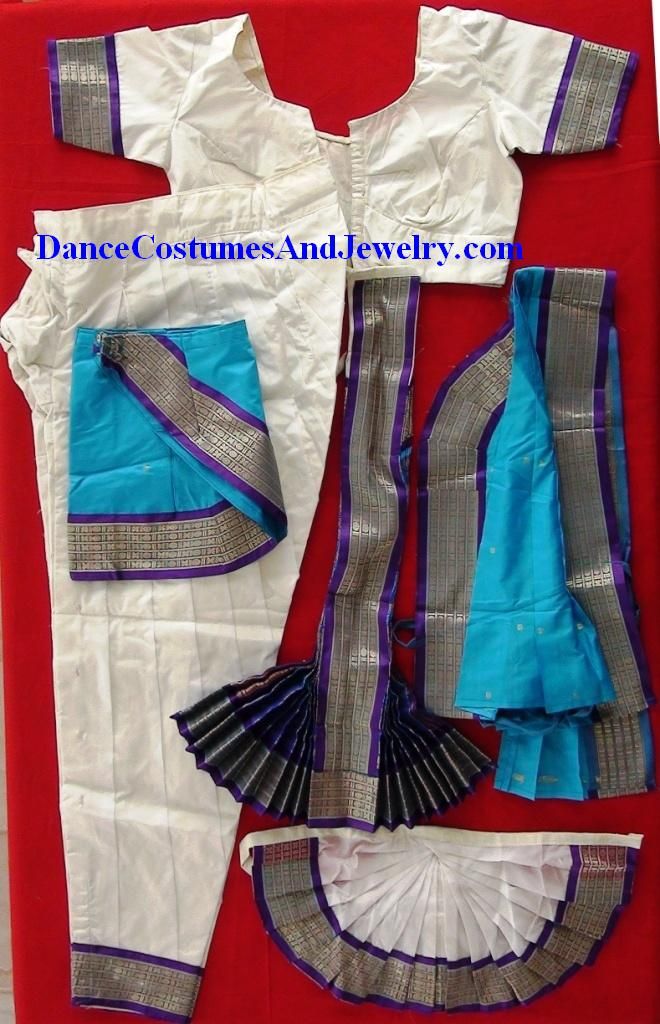
At http://www.dancecostumesandjewelry.com/ you can submit the measurements accurately online and select the color of dance costumes as you wish. There is no limitation. In fact you can even upload a photo of the sample dance dress you have in mind too. We have tailors in different states in India. Most of our Bharatantyam dresses are stitched in Chennai and the Kuchipudi dresses are stitched in Hyderabad. Here are some samples of fast moving dress colors we do. This is to just give you an idea. We do not limit the color combination or style of the dance dress as we mentioned earlier. We have skirt style and pant style Bharatanatyam dress. Also we have 2 fan and 3 fan Bharatanatyam costumes. In our online store, you decide the color, style and the material.

Below we have shown some art silk material Bharatanatyam costumes.


Many thanks for looking at our sample pictures. Now please visit http://www.dancecostumesandjewelry.com/ and place your order. Please remember, all our costumes are stitched in India and so you have to wait at least 4 weeks to get them delivered to you if your are in US. Outside US delivery dates may vary depending upon the shipping method you have selected.
We will post more pictures soon.
Till then - have fun dancing ....